
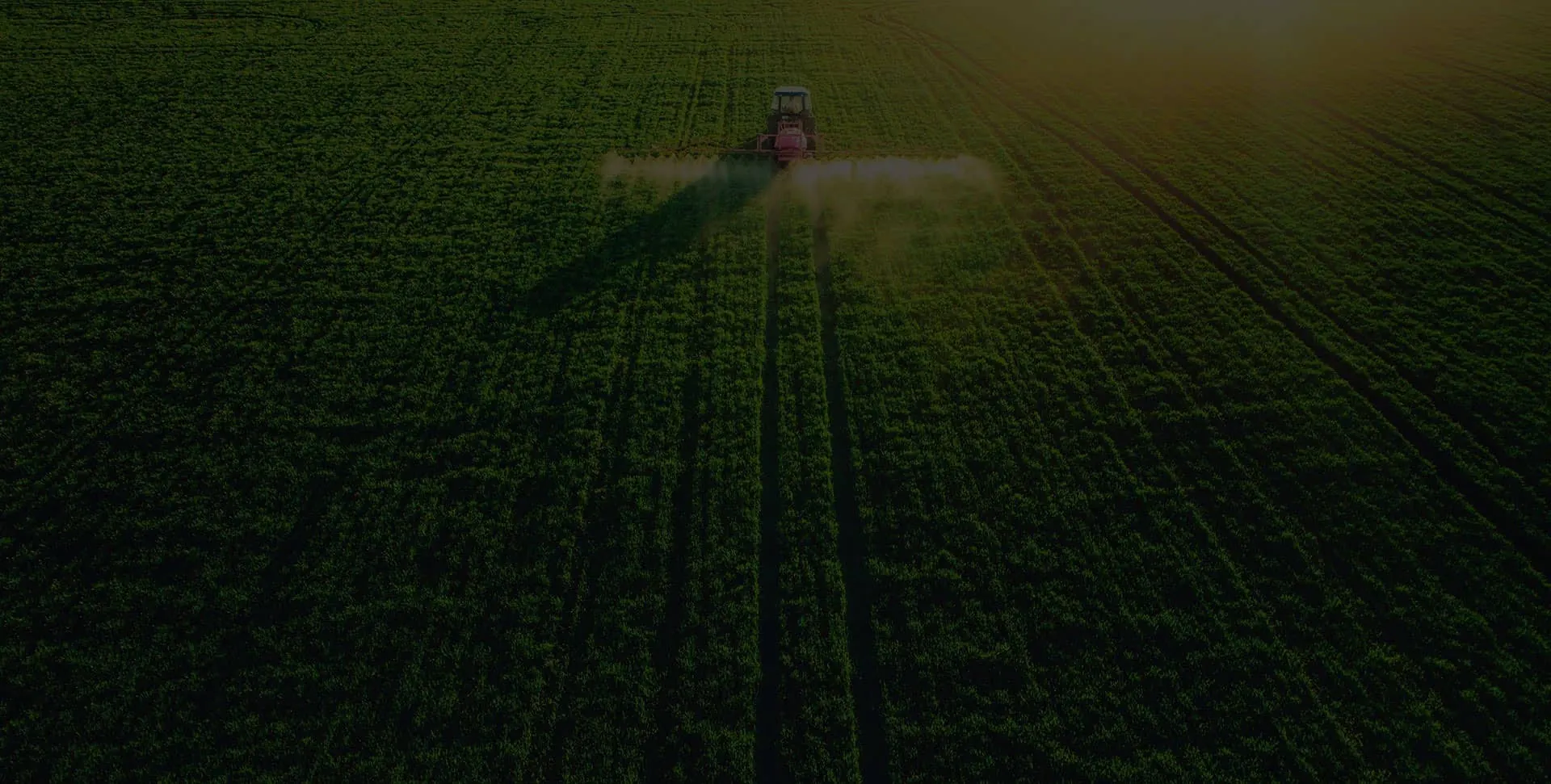
Trees need pressure and reach: the spray has to climb to the top of the canopy and still wet the inner leaves. The key timings are the new flush, panicle emergence and flowering, and fruit set. A portable power sprayer or an HTP set with a long hose lets one person cover a whole orchard block from the rows.
Spray calendar
-
1
After pruning / harvest
Post-harvestTarget: Fungal spores on wood and leaves
Clean up fallen leaves and fruit; protective fungicide on cut branches as advised.
-
2
New flush
Each flushTarget: Citrus psylla & leaf miner, mango leaf webber
Spray tender leaves when the pest appears; cover both sides of the new growth.
-
3
Panicle & flowering (mango)
Jan–MarTarget: Mango hopper, powdery mildew
Sprays at panicle emergence and before full bloom as advised by KVK; avoid spraying insecticides at full bloom to protect pollinators.
-
4
Fruit set & development
After fruit setTarget: Fruit fly, anthracnose, pomegranate blight
Methyl-eugenol traps for fruit fly; fungicide / bactericide on schedule during wet weather.
⚠ Use only CIB&RC-registered products at the dose and water volume on the label, and follow your KVK / agriculture department for local pest thresholds. Wear gloves, mask and goggles; never eat, drink or smoke while spraying.
Pests & diseases to watch
Tiny jumping insects on panicles; flowers drop, sooty mould.
White powder on panicles and young fruit in cool, dry nights.
Sting marks on ripening fruit; maggots inside, fruit drops.
Oily dark spots on leaves and fruit that crack.
Sprayer tips for orchards
- Spray from both sides of the row and finish with the top of the canopy.
- Adjust the gun: wide cone close to the tree, narrow jet to reach the top.
- Use a strainer on the suction pipe — dirty water blocks guns and wears HTP pumps.
- Avoid insecticides at full bloom to protect bees and other pollinators.
Recommended Masand sprayers
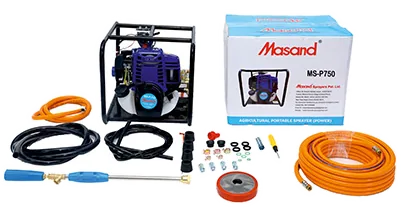 MS-P-750
- 8–10 L/min
- 200–350 psi, max 400 psi
- GX-35 4-stroke · 34 cc
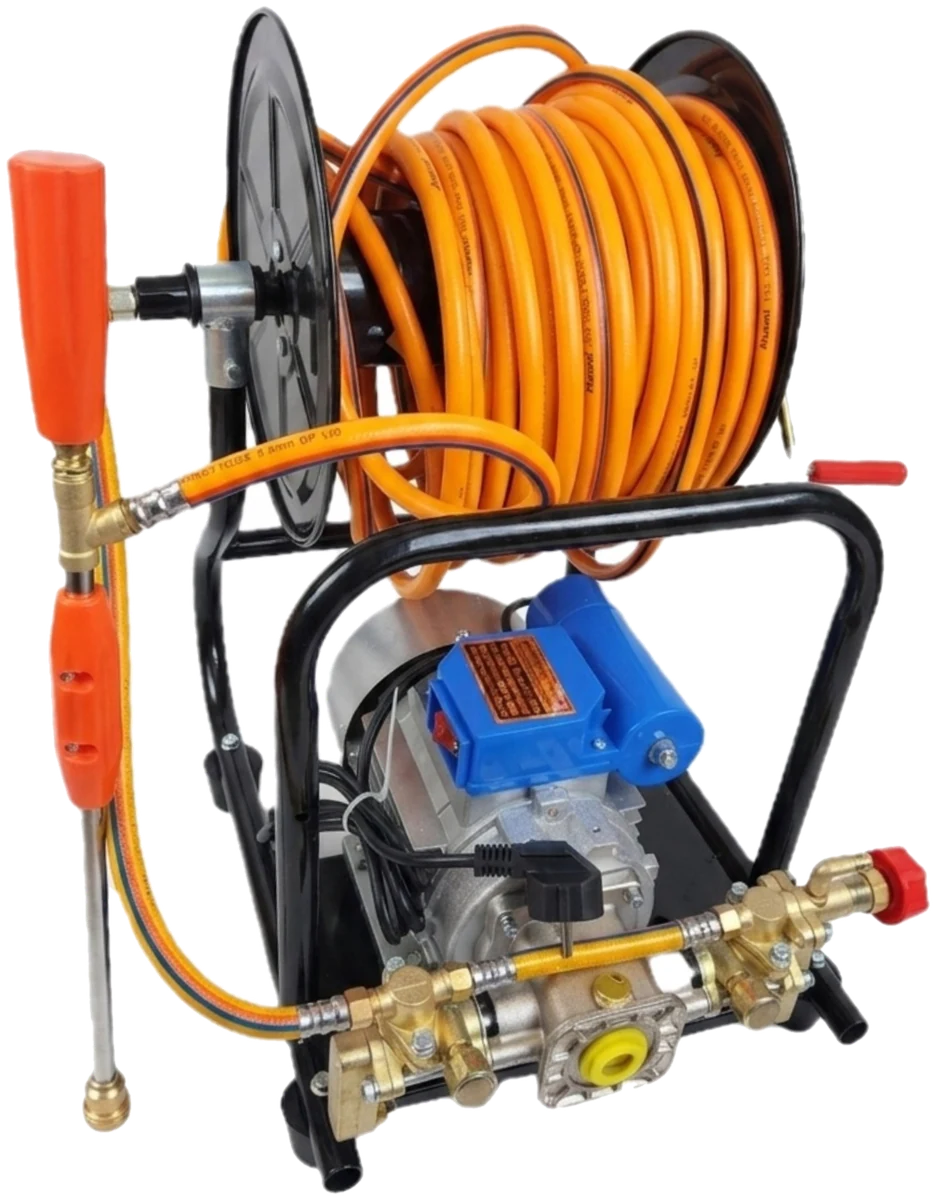 MS-P750 (Electric)
- 150–300 psi, max 300 psi
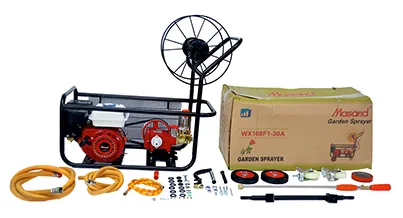 WX-168-FI-30A
- 139F · 98 cc
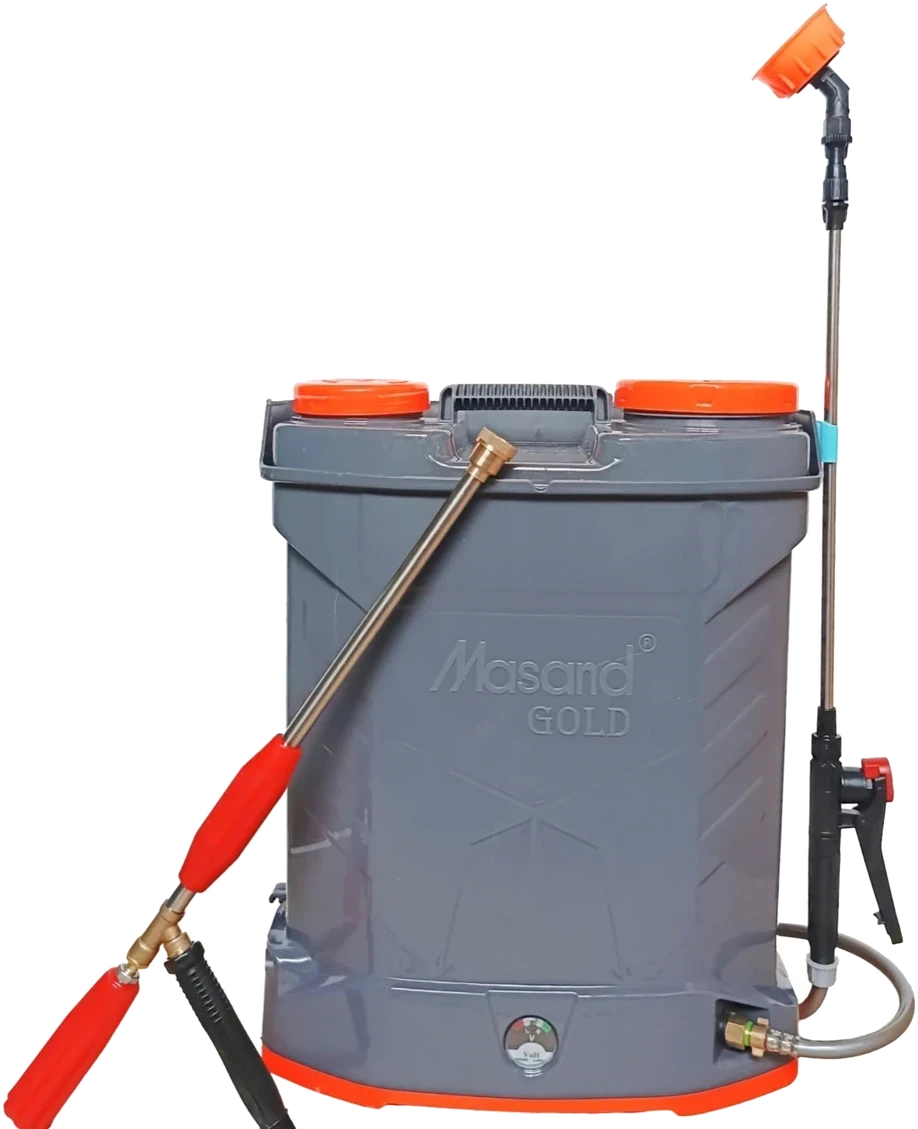 Masand Gold
- 12V · 18 Ah
- 9.2 L/min
- 180 psi
Find the right one for my acres → Ask on WhatsApp
Frequently asked
Which sprayer is best for mango and other fruit trees?
Trees need pressure and reach. A portable power sprayer developing up to 400 psi, or an HTP set (No. 30 and above) with 30–100 m hose and a hi-jet gun, reaches the top of large trees. For small or young trees a 180 psi double-motor battery sprayer is enough.
More crop guides